

Confident Pass Driving School

Categories
Driving instructor

How to Become a Driving Instructor: Guide to Starting a Rewarding Career

Driving instruction can be a highly fulfilling career for those individuals who have a passion for driving, talking, and helping students become confident drivers. Professional Driving Instructors are key to ensuring that new drivers get into safe driving practices, get familiar with the rules of the road, and prepare for their road test. If you love interacting with people and would like to embark on a flexible career path, becoming a driving instructor is a good way to go. At Confident Pass Driving School, we realize that being a good instructor is not enough – our driving instructors also need to be patient, teachable, confident and road safety-oriented.

What Does a Driving Instructor Do?

However, a driving instructor’s job goes far beyond sitting next to a student and telling him or her how to drive a vehicle. It is all about helping students become safe, reliable, and competent drivers. It means telling the rules of the road, showing proper ways to do things, finding weaknesses, dealing with risks, and adjusting instruction according to specific needs of learners.

All the learners are different from one another. Some of them can be nervous at first when they start to drive, while others might become confident fast, but they need some more help with maneuvers, traffic situations, or decision-making. It is what a good instructor should understand, which means that besides knowing about driving itself, he or she also needs to know how to communicate.

Who Can Become a Driving Instructor?

Prior to embarking on your journey to be an instructor, it is vital that you know the fundamental requirements for the job. In the UK, individuals looking to obtain the status of being an Approved Driving Instructor, also referred to as ADI, will be required to meet certain requirements, according to the Driver and Vehicle Standards Agency (DVSA).

In most cases, the minimum age requirement is 21 years, and one should possess a driving license for the stipulated time. You should meet the eyesight and criminal records requirements. The satisfaction of these basic requirements will enable you to start the qualification process; however, to become a great instructor will require far much more beyond just fulfilling the legal requirements.

Driving should be something that you love and have knowledge about the rules of the road. You should also be able to communicate information effectively, stay calm under pressure, and be able to work with people of various personality types. Effective time management skills are essential due to the numerous tasks done within a day.

Do You Have the Right Skills?

Driving skills are just one facet of what makes someone a good instructor. Teaching involves an entirely different skill set. It might take repeated attempts on the part of the learner before they realize what they are doing wrong; thus, patience is vital.

Communicating with the learners is especially crucial. The teacher must be able to give simple instructions without confusing the learner with too much information. They must also be able to offer constructive criticism, instead of simply pointing out the mistake. Effective instructors go further and tell the learner why things went wrong and show them how to correct the mistakes.

A third important characteristic is confidence. It’s important for the learner to feel that the instructor knows what they are doing and will keep them safe. On the other hand, instructors should maintain a certain level of friendliness so that the learners do not feel too hesitant to ask questions.

Understand the Qualification Process

The journey of becoming an authorized driving instructor entails a number of steps. Having fulfilled the eligibility criteria, candidates for this position have to take all necessary exams and evaluations.

The first step includes a theoretical test which is designed to evaluate the candidate’s level of understanding of road safety, driving laws and other related issues. Hazard perception is also a crucial element since it enables instructors to detect possible danger and train learners to be prepared for various threats.

The second step evaluates a candidate’s ability to drive. The driving instructor must prove his or her ability to demonstrate high-level driving and cope with any road and traffic situations.

The third step evaluates instructional ability. This is the point when one has to prove the ability to work with a learner, develop and conduct an effective training session.

Since there are changes in the requirements, testing procedures, and fees charged from time to time, one should consult the appropriate authorities for the most updated information.

Prepare Thoroughly for Your Tests

Being well prepared is probably one of the key steps to becoming a driving instructor. Even though having lots of experience on the road does not necessarily make you ready to teach.

Firstly, it is recommended to go back to the basics of driving and road safety issues. In this case, you should use The Highway Code as a main source, but theory and hazard perception materials could also be useful in terms of knowing how to pass relevant tests. Instructor-specific training materials may be useful for learning some training techniques.

Secondly, practical training is no less important than theoretical knowledge. Working with an experienced trainer can help you find some gaps in your driving and training knowledge.

Gain Experience as a Teacher

One of the biggest changes for new instructors is learning to think like a teacher and not just a driver. In the driver’s seat, there are several tasks performed almost on autopilot. Being an instructor, one needs to know how to perform them so that they can explain them to someone who may have never driven a car in his life.

For instance, instructing a learner to check his mirrors may not be sufficient. One may need to clarify which mirrors he should check, when he should do it, what exactly he should be looking for, and how that will affect his further actions.

This skill requires practice, and the more practical experience one gets while working with different learners, the better.

Decide How You Want to Work

There are a number of ways you can go about your future career after qualifying. You can decide to work with an existing driving school, work as an associate, join a franchise, or eventually open up your own driving business.

Joining a franchise can mean joining an already existing brand with marketing, administration, and a ready source of learners. The downside is that you will need to pay franchise fees and adhere to some business policies as dictated by the franchise.

Associating with an independent driving school means that there is a balance of having some degree of independence and yet having a ready-made brand name and reputation to draw customers from. According to the agreement, you will be required to provide the driving vehicle as well as some operational expenses.

Opening up your own driving school can be very rewarding in terms of total independence. You can determine the charges, working hours, and marketing strategies, among other aspects of running the business.

Choose the Right Instructor Vehicle

The car you drive is one of the most vital purchases that you can make as an instructor. The reason why you need a dependable car is because you have to give lessons and you earn from those lessons.

A good car for an instructor must be comfortable, practical, economical, and roadworthy. The dual controls are very crucial because they help the instructor in case of any intervention to prevent risks in the lessons.

There are other factors that you can consider as an instructor. These include visibility, comfort of passengers, fuel economy, maintenance cost, and mileage. There are some instructors who buy cars, while others prefer to lease cars, which are ideal for driving lessons.

When selecting a car, you need to consider your budget and operating cost. You can choose a cheap car only to realize that it is not economical at all in the future.

Get the Right Insurance

Insurance is yet another important issue to take into consideration. Regular personal insurance coverage may not necessarily offer the required coverage for driving lessons for hire. The insurance needs to be tailored for the specific intended use of the car.

In certain situations, the required insurance coverage would include coverage for driving the car by the learners, as well as covering any specific modifications that an instructor might make to the car, including dual controls, mirrors, signs, and other accessories. It is also wise to consider having replacement coverage since failure to teach due to repair work on the car could cost you.

Always talk to the insurance agent regarding your exact needs.

Conclusion- Start Your Journey with Confidence

In order to become a driving instructor, there is a need to dedicate oneself to the process, to plan well, be good at driving, and also be capable of teaching the learners. This involves several issues, from being able to meet the required initial qualifications through the qualifying process to selecting your vehicle, securing appropriate insurance cover, looking for learners and running your business.

Most successful driving instructors not only ensure that their learners qualify for passing the test, but also help them to develop into responsible drivers in the future. If you have the patience to teach, the self-confidence to communicate, and the motivation to have a fruitful career, then driving instruction might be just the best option for you.

At Confident Pass Driving School, we are convinced that quality education should start with having instructors who are competent, patient, and dedicated. Whether you want to become an instructor yourself or want to understand better what it means to be a driving instructor, planning well in advance is the best way to secure yourself a bright future ahead. Great Driving Lessons should start from great teaching, and great teaching from a good instructor.
Categories
Driving Course Driving instructor

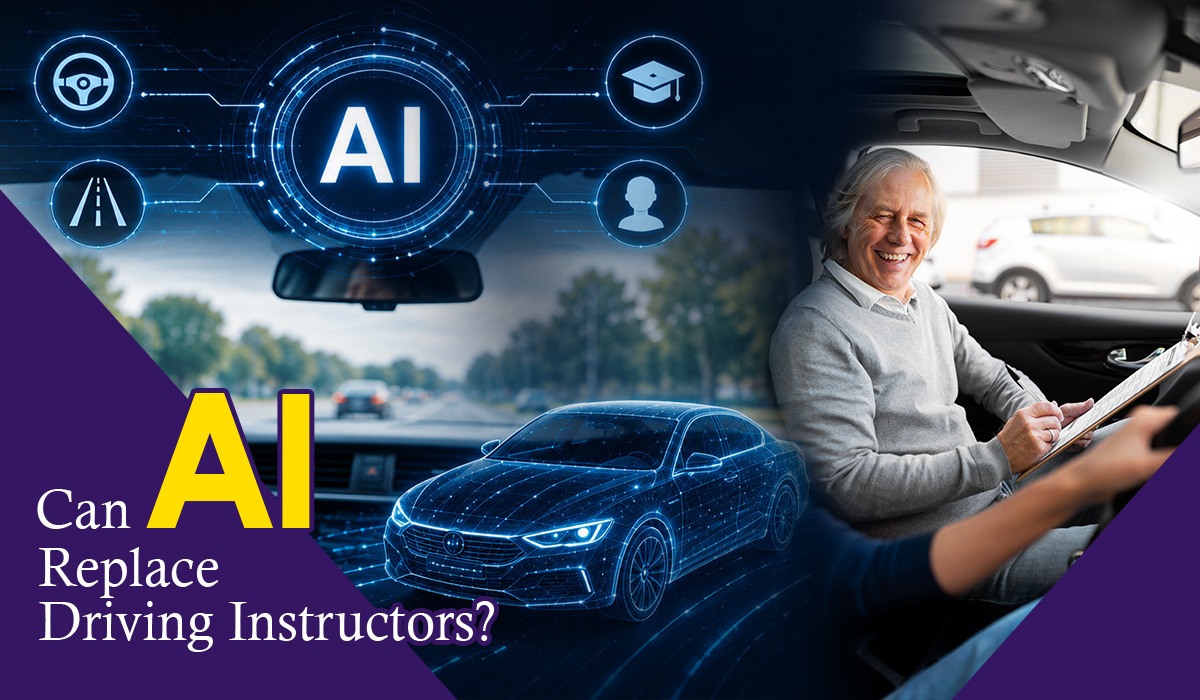
What’s Next for Learners with AI and Human Driving Instructors?

We all know that Tech and AI are moving super-fast these days. Self-driving stuff and collision alerts are everywhere now, so folks naturally wonder if old-school driving is dying out or if driving instructors will even matter soon. Sounds wild, but the real story is pretty different.

Driving changes daily, yet human skills still run the show. Calm vibes, emotional strength, and reading crazy street situations cannot be handled by robots. Good instructors understand this balance completely. They can create a chill zone where learners feel supported, not stressed. Advanced curated lessons mix tech training with confidence coaching, which pumps out drivers who can handle both the ride and street panic. Silicon chips process data, but wisdom comes from actual people.

Will AI Make Instructors Useless?

People talk about instructors becoming unnecessary all the time. Truth is simple: instructors refusing to change will struggle, but those rolling with the progress will crush it. AI rocks at boring or mechanical tasks. Lane-keeping, parking help, and live traffic alerts look super cool. Navigation systems dynamically plan the current route scenario, dodge jams or pre-judge crashes. These tools save hours and lower risks.

Still, software has some limitations. It can never replace human gut feelings. Emergencies need much quicker moves, mixing logic with pure instinct. Computers cannot calm a shaking newbie or adapt to random pedestrian moves. Ethical choices on streets – picking between two bad options – stay locked in human territory. Good instructors are good at providing empathy, support, and trust.  This is especially beneficial to fearful or neurodivergent students. This is why the human element will always be necessary- it has no complete replacement.

The process of learning to drive goes far beyond the simple mechanics of operating a vehicle. This includes the matter of emotions, focus, and confidence in difficult circumstances. To put it in a nutshell, technology provides helpful guidance, and the instructors’ emotive teaching is necessary in real time.

Self-Driving Cars: Myth vs. Reality

Popular media conjures images of cars travelling about on their own while their passengers lounge around leisurely. Nothing could be further from reality. Self-driving vehicles on the market currently are just advanced driver-assistance systems, not fully autonomous vehicles. Human drivers must be alert and ready to take control at a moment’s notice.

Weather, random obstacles, and wild road users keep challenging sensors and algorithms. Responsibility for safe steering stays right with the human behind the wheel.

Even high-end tech demands full supervision. Confidence behind the wheel remains the ultimate shield. A driver understanding both the car and personal limits stays way safer than someone blindly trusting automation.

The Shift in Modern Driver Training

Driver training looks totally different compared to the old days. Lessons administered by driving instructors feature electric and hybrid car basics, safe use of driver-assist gadgets, and defensive driving tricks for heavy traffic. Instructors target-

  • Risk Management
  • Emotional Control
  • Resilience

    Students master the skills of-

    • When to trust automation, and
    • When to turn it off

      The way attention spans, multitasking, and situational awareness get sharp fast. This massive approach guarantees learners do not just pass some test. They lock down skills for lifetime safety. Technical know-how combined with personal confidence creates drivers ready for any environment.

      Why Emotional Resilience Rules

      Streets feel busier, faster, and tougher than ever. Technology helps with physical reactions, but it never stops panic. Algorithms fail to soothe nerves before merging onto a highway or guide someone through breathing exercises during anxiety attacks. They lack the power to build trust in personal capability or create resilience after taking a long break from wheels. Customisation of learning techniques is also out of the question for the neurodiverse population.

      Real driving coaching remedies this deficiency. One has to have confidence, emotional stability, defensive driving skills, and the ability to be composed during difficult times to succeed on the road. AI helps in all stages, but confidence is provided by human coaching.

      Why Should You Choose Confident Pass Driving School?

      Confident Pass Driving School is a good illustration of what modern coaching for driving should look like. Instructors do their best to make the transition from simple actions to developing real confidence. Lessons are offered in a comfortable atmosphere. Also, they are lucidly customised according to personal needs. In case of nervous drivers, special assistance is provided. With the help of proven methods, students learn to focus, develop attitudes, and gain confidence. The training includes the use of electric cars and driver assistance systems.

      Moving Towards a Human-Centered Future

      The drivers of tomorrow are hybrid. They know everything about the car, trust their intuition, use the right technology, and are able to keep calm. Learning never ends. Artificial intelligence assists with safe driving, while human self-confidence guarantees pleasant rides. The purpose remains unswerving: to help students grow from nothing.

      A Practical Reflection

      Signing up for a driving school with advanced technology and top-notch driving instructors is equivalent to purchasing peace of mind. The classes cover not only driving or braking. They include keeping calm during rush hour, relying on one’s personal judgment in case of automation doubts, and reminding learners of the importance of confidence. Technology guides, but reassurance never comes from code. Reassurance comes from the instructor sitting right beside the learner, dropping steady words and patient coaching.

      Unlocking Radiant Confidence and Lasting Vitality

      Great outcomes spring from teaming up with a school valuing honesty, safety, and natural growth through systematically planned Driving Lessons. The integration of technology and human empathy makes the program truly one of a kind. Our continuous support will ensure that confidence is built well beyond the initial driving lesson. Driving is an essential skill for life. Serenity, competence, and complete confidence in any situation denote expertise. Contact us soon to know more.

      Categories
      Driving Test

      The 2026 UK Driving Test Pass Rate Report: Things That Learners Need to Know

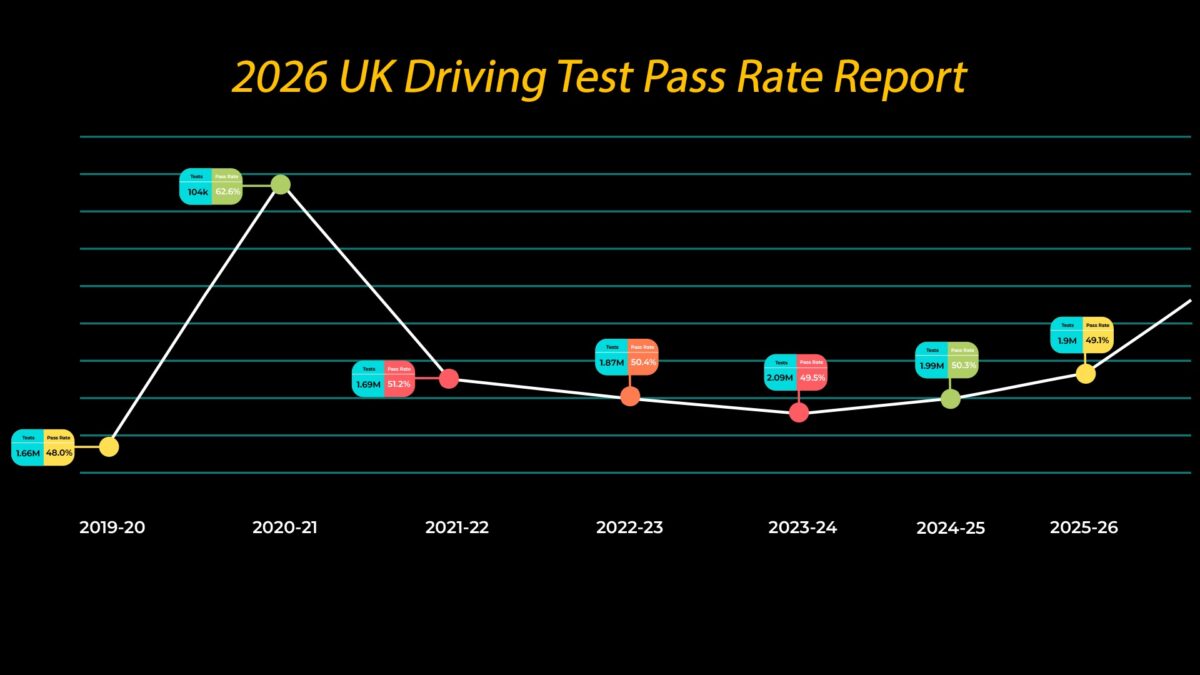
      With independence on the horizon, many learners start by trying to find out about the current trends in the UK Driving Test in London so that they know how likely they are to succeed. The 2026 UK driving test pass rate report can give them a lot of information regarding how well people are doing throughout the nation, as well as how this can be achieved. Although the average pass rate is still about 48%, there is a lot more than meets the eye when it comes to this matter.

      Understanding the 2026 UK Driving Test Pass Rates

      In the 2026 driving test data, one will find out that pass rates in the UK have been steady for a while now, showing a minor increase compared to past years. In the case of learner drivers, the average pass rate stands at about 48%, which is below the half but still gives hope to those willing to learn how to drive.

      One interesting statistic found in the 2026 driving test data is that first-time passes are slightly higher than those who retake their tests after failing. This implies that learning for the first attempt is highly important, as learners who attend enough driving lessons show more consistency with DVSA standards.

      How Pass Rates Have Evolved Over Time

      UK driving test pass rates have seen an increasing trend in the last two decades. In the beginning of the 2000s, there was a relatively lower pass rate of 44% as compared to recent figures indicating pass rates trending towards 48–49%. The improvement in passing rate can be attributed to increased awareness about the importance of learning proper driving skills and road safety.

      Pandemic times have affected the schedule of test sessions, leading to delays and the need for backlog clearing. However, even as things have improved from the standpoint of scheduling services, the demand for appointments has remained very high.

      The overall trend indicates the difficulty of the driving test process but an increasingly higher level of preparedness among learners.

      Key Factors Influencing Driving Test Success

      There are various aspects that influence the results of driving tests besides basic proficiency at driving a car. The first one concerns the time spent on preparation. Those people who do not have enough experience in handling particular road situations (e.g., roundabouts, dual carriageways, intersections) will find it difficult to pass their tests successfully.

      The next important element that influences learners’ results is their confidence. It may negatively affect their ability to make decisions and react quickly to changing traffic conditions, thus increasing the risk of making unnecessary mistakes.

      The third factor related to the success of tests is the type of car used by learners when practicing. More and more people choose automatic cars to train in because it allows learners to concentrate on other essential components of the test (road awareness, hazard perception, and positioning).

      Lastly, environmental conditions should be taken into consideration because traffic volumes, weather, and even the location of test centers matter. Tests in urban areas are associated with more difficulties than tests in rural areas.

      The Role of Test Centre Location in Pass Rates

      One of the intriguing issues relating to UK driving test statistics is the difference that exists between test centers. Areas in urban environments, especially big towns, may register relatively low pass rates owing to the complexity in traffic systems, high traffic levels, and challenging road designs. In other words, the candidates appearing for tests in such places should possess the ability to cope up with traffic conditions.

      On the other hand, pass rates in rural test centers will be relatively higher because of the simplicity of roads and minimal traffic. This does not mean that the process of testing becomes easy since it just shifts emphasis from one set of skills to another.

      Success therefore is dependent on whether the candidates have been able to train on various types of roads.

      Manual vs Automatic Learning: What Learners Should Know

      The discussion about whether to give lessons manually or automatically still affects the pass rates in the UK. Learners usually learn how to drive manually using traditional cars; however, the number of automatic cars is rapidly increasing because of their ease of use.

      Driving a manual car is difficult as the learner needs to coordinate clutch, gears, and observing. These tasks combined may lead to higher cognitive load; hence, it may become stressful. Driving an automatic car helps learners focus entirely on observing, which makes this process easier for them.

      Statistics may show the difference in the percentage of people who can pass tests when it comes to manual or automatic cars. The reason is the level of confidence learners have in themselves while learning. Those who lack confidence prefer to take lessons using an automatic car.

      Why First-Time Preparation Matters More Than Ever

      In light of the fact that waiting periods for tests are currently high in demand, first-time passing has become essential. Failure in the test currently means that one has to wait for quite some time before another test becomes available.

      Good preparation should involve lessons on a regular basis, as well as sufficient mock tests and lots of practice. One should have enough time to practice driving in different road situations as well as be very familiar with the test route.

      One is much more likely to pass the test on first-time try if he/she is adequately prepared for it.

      Building Confidence Through Structured Learning

      Confidence is a vital ingredient in achieving test success. Most students do not realize how much the mind plays a role in impacting one’s driving capabilities. Through structured learning, this stress is greatly minimized by making the art of driving habitual.

      Instructors work on building up their students in steps from basic handling skills to higher road awareness skills, which ensures that the learner does not get too overwhelmed and builds up his/her own level of confidence.

      Instructor feedback also serves to correct any minor errors before they become habits that would result in test failure.

      How Learners Can Improve Their Chances of Passing

      Passing the driving test is not a matter of luck but rather one of preparation. Regular practice, listening to feedback, and knowing some test routes are just a few things that will help you pass your driving test.

      Practicing your anticipatory skills is an important tip to keep in mind when you’re getting ready for your test. The inability to see or react to hazards is a reason why many people fail their tests.

      Another helpful tip is remaining relaxed during the test. Breathing exercises, familiarity with your vehicle, and other practices before the test day will lower your stress levels.

      Finally, learners that regard each lesson as a rehearsal will definitely do well in their tests.

      The Importance of Professional Driving Instruction

      Instruction quality directly affects the results that can be achieved during the test. Professional instructors are knowledgeable about DVSA standards and conduct lessons based on each learner’s unique needs. In addition, they give learners valuable information regarding potential pitfalls in their preparation for the test and what to expect.

      The ability of an instructor to develop not only driving skills but also confidence and discipline is important for success in testing and safe driving in general.

      That is why such organizations as Confident Pass Driving School have a significant role to play in learners’ progress.

      Conclusion: What the 2026 Report Really Means for Learners

      A look at the results of the report on the pass rate of the driving test in the UK in 2026 reveals the same old truth that preparation makes all the difference, and not just the statistics. The average pass rate is below fifty percent, but those who prepare properly by taking lessons and practicing will have a higher chance of success.

      Place, type of car, and external factors all matter, but they will become secondary to the skills gained and confidence acquired. Knowing these truths makes a person more successful during the test.

      Those who prepare in an urban environment, such as the UK Driving Test London, will have to rely on more professionals due to the complexity of roads and traffic demands in the area. They can be helped through competent driving instructors in London who can assist them in navigating these difficult situations. All in all, those who prepare adequately for the test and have the proper attitude will be able to pass the test in 2026 with the help of trusted institutions such as Confident Pass Driving School.